
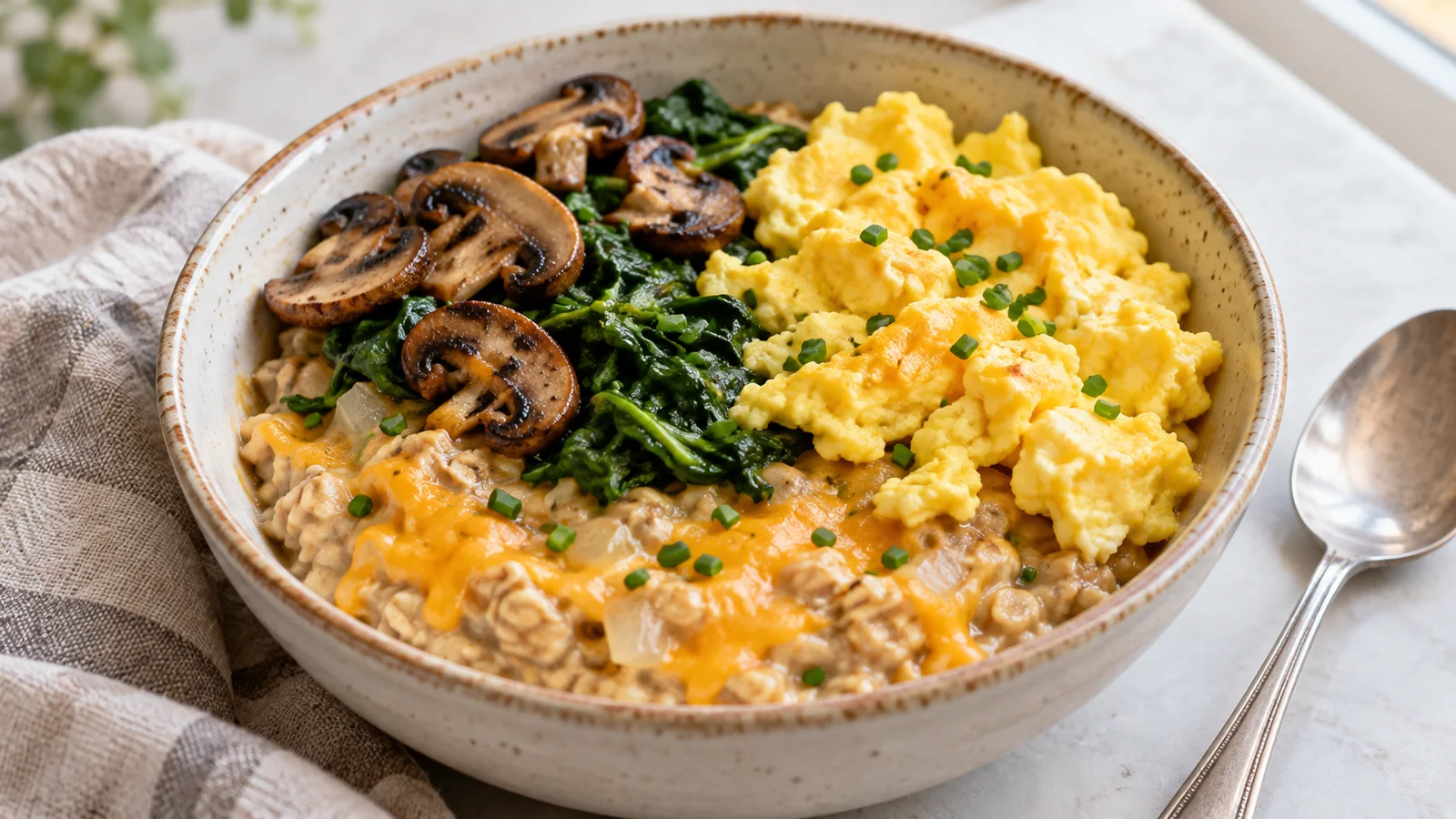
Savory oatmeal is a warm grain bowl built from plain oats, vegetables, seasoning, and a protein food such as eggs, chicken, or Greek yogurt. The oats do not need sugar to taste good. They need enough seasoning, a texture you enjoy, and toppings that add contrast instead of making everything uniformly soft.
Published October 16, 2026
The mushroom, egg, and cheddar bowl below provides an estimated 25 grams of protein from its counted ingredients. Two further versions use yogurt or chicken, with clear serving weights and separate calculations. None requires protein powder or a special high-protein oat product.
Think of this as a breakfast, lunch, or light dinner template. The same oats can become a creamy bowl with a distinct topping, a looser soup-like meal, or a firmer base for vegetables. Start with the texture you want rather than assuming every bowl must resemble sweet breakfast porridge.
What makes savory oatmeal taste good?
Plain oats have a mild flavor. That gives you room for mushrooms, garlic, herbs, cheese, chili, or ginger, but it also means an unseasoned bowl can taste unfinished. Build flavor in layers: cook an aromatic vegetable, season the oats, and finish with something fresh or acidic.
Texture matters just as much. A creamy base benefits from browned mushrooms, crisp cucumber, or a fully cooked egg served in larger pieces. If you stir every topping into the porridge until it disappears, the result may feel heavy even when the ingredients are appealing individually.
Start with water unless you know exactly what your broth contributes. Broth can be convenient for flavor, but its sodium and protein content vary widely. A label that says “bone broth” is not a universal nutrition value. Use the product’s serving information if you want to include it in your calculation.
Choose the right oats and measure them dry
Old-fashioned rolled oats are a useful starting point for these recipes. They cook relatively quickly while retaining some visible flakes. Quick oats usually become softer sooner. Steel-cut oats take longer and need their own liquid and timing instructions, so they are not a direct time-for-time substitution.
The recipes use 48 grams dry rolled oats per bowl. The reference is Bob’s Red Mill Gluten Free Organic Old Fashioned Rolled Oats, whose label lists 6 grams protein per 48 grams. Another brand may use a 40-gram serving or a different rounded protein value. Read the grams rather than assuming every half cup is identical.
Water changes the final weight of oatmeal without adding protein. A thin bowl made with extra water may weigh far more than a thick bowl with the same 48 grams of oats. That is why the recipes start with dry weights and do not claim a universal cooked-cup serving.
If you need gluten-free food, use oats specifically labeled gluten-free and check the remaining ingredients too. Plain oats, flavored oat packets, broth, soy sauce, and toppings are not interchangeable for allergen purposes.
Recipe 1: Mushroom, egg, and cheddar savory oats
Makes one substantial bowl. Allow roughly 15–20 minutes. This version keeps the eggs separate from the oatmeal so you can control their texture and cook them fully without making the whole pot lumpy.
Ingredients
- 48 grams dry old-fashioned rolled oats
- 240 grams water, plus small additions to adjust texture
- 2 large eggs, approximately 100 grams total without shells
- 28 grams shredded sharp cheddar
- 80 grams mushrooms, sliced
- 40 grams fresh spinach
- 20 grams onion, finely diced
- 5 grams olive oil
- 0.5 gram black pepper
- 5 grams chopped chives, optional
Method
- Combine the oats and water in a small saucepan. Bring to a gentle simmer, then reduce the heat and cook according to your oat package, stirring occasionally. Add a little water if the oats become thick before they are tender.
- Meanwhile, heat the oil in a skillet over medium heat. Add the mushrooms and onion. Let the mushrooms contact the pan between stirs so they can develop color rather than merely steaming.
- Add the spinach and cook until wilted and excess liquid has evaporated. Transfer the vegetables to a plate.
- Beat the eggs in a bowl. Cook in the skillet over moderate heat until fully set, breaking them into broad pieces. Scrambled eggs should not remain runny.
- Stir the cheddar and black pepper into the cooked oats. Adjust with water a tablespoon at a time if you want a looser base.
- Put the oats in a bowl and arrange the vegetables and eggs on top. Add chives if using, then taste before deciding whether any extra salt is needed.
The cheese seasons the base and gives it body; the mushrooms provide a firmer topping. You can mix a little of the vegetables into the oats, but leave some visible pieces on top for contrast.
Protein calculation
The counted ingredients contribute 6 grams from 48 grams oats, 12 grams from two large eggs, and 7 grams from 28 grams cheddar, for approximately 25 grams per bowl. The egg value uses the American Egg Board label for a 50-gram large egg; the cheese value uses the Sargento Sharp Cheddar label.
Mushrooms, spinach, onion, and optional chives are excluded from that protein subtotal. The oil still counts toward the meal’s energy and fat if you are tracking them. This article does not provide a complete macro analysis or claim that every brand produces an identical finished bowl.
Recipe 2: Herby yogurt oats with cucumber and tomato
Makes one bowl. This version combines warm oats with a cool, tangy topping. It is useful when you want savory oatmeal without eggs. Keep the yogurt thick and the vegetables well drained so the bowl stays pleasantly creamy.
Ingredients
- 48 grams dry old-fashioned rolled oats
- 240 grams water
- 170 grams plain nonfat Greek yogurt
- 100 grams cucumber, diced
- 80 grams tomato, diced
- 10 grams lemon juice
- 5 grams olive oil
- 4 grams fresh dill or parsley, chopped
- 0.5 gram black pepper
Method
- Cook the oats in water following the package directions. Aim for a thick but spoonable base rather than a dry mound.
- Mix the yogurt with half the lemon juice, half the herbs, and the black pepper.
- Combine the cucumber and tomato with the olive oil, remaining lemon, and remaining herbs. Leave behind any pool of watery tomato juice when serving.
- Transfer the oats to a bowl and let the most vigorous steam subside briefly. Spoon the yogurt onto the oats rather than boiling it in the saucepan.
- Add the vegetables and serve immediately. Stir together at the table as much or as little as you prefer.
The counted estimate is 6 grams from oats plus 18 grams from 170 grams FAGE Total 0% plain Greek yogurt, or approximately 24 grams protein. Vegetables, herbs, and lemon are excluded. A yogurt with a different label changes the number.
If you prefer a completely hot bowl, keep the yogurt beside it and take bites of each rather than trying to boil the dairy into the oats. If you prefer everything cold, use a properly prepared and refrigerated oat base; simply leaving hot oats on the counter until cold is not a meal-prep method.
For a sweet chilled alternative, our overnight oats with Greek yogurt guide uses a different preparation method. The savory bowl here is designed around cooked oats and fresh toppings.
Recipe 3: Ginger chicken oats with an egg
Makes one bowl. This is a looser, spoonable preparation with chicken, ginger, and greens. It is not a traditional rice congee recipe; the oats have their own flavor and cook differently.
Ingredients
- 48 grams dry old-fashioned rolled oats
- 300 grams water, with more available if needed
- 85 grams fully cooked canned chicken breast, drained
- 1 large egg, approximately 50 grams without the shell
- 60 grams carrot, finely grated
- 40 grams fresh spinach, chopped
- 5 grams fresh ginger, finely grated
- 3 grams garlic, minced
- 5 grams reduced-sodium soy sauce, or another suitable seasoning
- 3 grams toasted sesame oil
- 10 grams scallion, sliced
Method
- Bring the water, ginger, garlic, and carrot to a simmer in a saucepan. Add the oats and cook according to the package, stirring as needed.
- Cook the egg separately until the white and yolk are firm, or scramble it until fully set.
- When the oats are tender, stir in the spinach. Add the drained chicken last and warm gently. If using previously refrigerated leftover chicken, heat it to 165°F.
- Stir in the soy sauce and sesame oil. Add a little water if you want a brothier consistency.
- Serve with the cooked egg and scallion. Taste before adding more seasoning.
The protein subtotal is 6 grams from oats + 15 grams from the 85-gram drained Swanson chicken reference + 6 grams from the egg = approximately 27 grams. The other ingredients are excluded. Without the egg, the counted subtotal is approximately 21 grams.
Keep the chicken in small pieces, but do not simmer it for the full oat cooking time. It is already cooked and can become finely shredded with unnecessary stirring. For more ideas using the remainder of an opened can, see canned chicken meal prep.
Adjust the texture before changing the toppings
For thick oatmeal, begin with the recipe’s water amount and simmer gently until the flakes are tender. Let it stand only briefly before serving, because oats continue to thicken. If the spoon leaves a channel that stays open and the oats feel stiff, stir in a little hot water.
For a creamier bowl, stir a little more frequently and add water in small amounts. For a looser, soup-like bowl, use the ginger chicken recipe’s larger water amount and keep extra hot water nearby. You should be able to choose the consistency without changing the dry oat portion.
A very wide pan can evaporate water faster than a small saucepan. A vigorous boil can also thicken the mixture before the oat flakes soften. Lower the heat and add liquid rather than assuming the recipe needs more oats.
Quick oats may become smooth almost immediately, while thick rolled oats can stay chewy for longer. Follow the product’s cooking directions as your baseline. Changing oat types is a reason to reassess the cooking method, not evidence that one type is inherently better for everyone.
How to add protein without overwhelming the bowl
The oatmeal base contributes some protein, but the eggs, dairy, or chicken are what bring these examples into the mid-twenties. You do not have to keep adding toppings once the bowl suits your appetite and overall eating pattern.
Choose one main addition first. Eggs give you a distinct topping and work with mushrooms or cheese. Greek yogurt adds tang and creaminess. Cooked chicken suits a brothier bowl. Combining several protein foods can be useful, but it can also make a portion larger than you want.
For a plant-based version, try cooked tofu or beans and use their label or a suitable database entry to calculate the amount. Do not carry over the egg or yogurt estimate after substituting them. Plant-based yogurt and cheese alternatives vary substantially in protein, so appearance alone is not a useful guide.
If you replace water with milk or a soy drink, account for the actual amount and product. A flavored drink may make the bowl taste unexpectedly sweet. Unsweetened does not mean identical protein across brands.
For wider meal planning, our protein per meal guide discusses how individual meals fit into a day. The numbers here describe recipes, not a prescription for every person’s breakfast.
Meal prep the base and toppings separately
For three servings of plain rolled-oat base, use 144 grams dry oats and begin with 720 grams water. Use a pan large enough to simmer without boiling over, and adjust liquid as needed. Larger batches may lose water at a different rate, so multiplying the ingredients does not guarantee identical cooking time.
Once cooked, divide into three shallow containers. Store vegetables, yogurt, and fresh herbs separately where practical. This keeps cucumber crisp, prevents yogurt from warming during reheating, and makes it easier to choose different flavors on different days.
If you use the mushroom version for several days, cook and portion the mushrooms and eggs separately from the oats. If you use the yogurt version, keep the dressed vegetables separate until eating. For the chicken bowl, a small container of cooked chicken and greens can be added during reheating.
Refrigerated oats can look firm even when they were creamy in the pan. Add a splash of water before reheating, stir, then add more only if needed. The amount depends on how thick the original batch was; it is not a reason to double the recipe’s entire liquid quantity.
Reheat only the portion you plan to eat. Keep cold toppings refrigerated while the base warms, then add them just before serving. A routine that preserves texture is more useful than assembling every bowl completely on the first day.
Egg safety and leftover storage
USDA’s egg guidance recommends firm yolks and whites, non-runny scrambled eggs, and 160°F for dishes containing eggs. The recipes above use fully cooked eggs rather than asking you to judge the safety of an egg stirred into barely warm oats.
For prepared meals, keep the refrigerator at 40°F or below, refrigerate within two hours or one hour above 90°F, and use shallow containers. Eat refrigerated leftovers within three to four days or freeze them sooner. Reheat leftovers to 165°F. See USDA leftover handling and safe food preparation basics.
Keep the earlier preparation date when adding an older cooked ingredient to a fresh base. A new topping does not reset the storage history of the oatmeal underneath. For transport and cooling details, use our meal prep food safety guide.
Common savory oatmeal problems
It tastes like plain breakfast oats with random toppings. Season the base, not just the top. Cook the onion, garlic, or ginger where appropriate, then taste the oats after adding cheese or sauce. A small amount of lemon or herbs at serving can connect the different parts.
It is too salty. Broth, cheese, soy sauce, and seasoned chicken can add up. Begin with water, measure strong condiments, and taste before adding salt. The FDA sodium guide explains how to compare servings and labels.
The yogurt looks grainy. It may have been stirred into a very hot pan. Keep it as a topping or add it off the heat after the vigorous bubbling stops. That is a texture choice, not a reason to hold a prepared meal unrefrigerated.
Everything is soft. Leave vegetables in larger pieces, brown mushrooms separately, or add fresh cucumber at serving. A measured crunchy topping can help, but include it in your tracking rather than treating a handful of seeds or nuts as nutritionally invisible.
The reheated oats are dry at the edges. Add water, cover appropriately for your microwave, and stir during reheating. Check the temperature in several places. The surface becoming hot does not establish that a dense center has reheated adequately.
Scale the bowl to your appetite
A smaller oat portion can make sense if you want a lighter meal, but change the calculation too. Using 32 grams of the reference oats instead of 48 grams contributes approximately 4 grams protein rather than 6. With the same eggs and cheddar, the first bowl’s counted subtotal becomes approximately 23 grams. The water also needs adjusting; start with roughly two thirds of the listed amount and add more as needed.
For a larger meal, add more oats, a side, or another food you enjoy. Avoid judging adequacy from protein alone. The serving needs to work for your appetite, schedule, and overall eating pattern.
Frequently asked questions
Can savory oatmeal be lunch or dinner?
Yes. Oats are a grain ingredient, and you can serve them whenever you enjoy them. Adjust the portion and accompaniments to your appetite instead of treating the bowl as a fixed breakfast size.
Can I microwave these recipes?
You can prepare the oat base according to its package’s microwave directions in a sufficiently large microwave-safe bowl. Cook the eggs and vegetables safely using their own appropriate methods, then combine. Do not assume the stovetop timing transfers directly.
Is savory oatmeal automatically healthier than sweet oatmeal?
No. The ingredients, portions, and your needs matter more than whether the bowl tastes sweet or savory. A savory bowl may contain salty sauces or a large cheese portion; a sweet bowl can include fruit, yogurt, and useful protein. Choose the version you enjoy and can prepare consistently.
Can I freeze the cooked oats?
A plain cooked base can be frozen in individual portions and reheated safely. Keep fresh cucumber, tomato, and yogurt for serving. Expect some texture change and add water during reheating as needed.
Build one bowl you want to repeat
Start with measured dry oats, choose a texture, and add one main protein food. Cook watery vegetables separately and finish with something bright. Once one combination works for you, change a topping rather than rebuilding the entire meal every morning.
Workit supports meal and nutrition logging if you want to record your actual portions. Review any AI-generated estimate and check ingredient labels, especially when substituting products. A subscription is required.