
Published
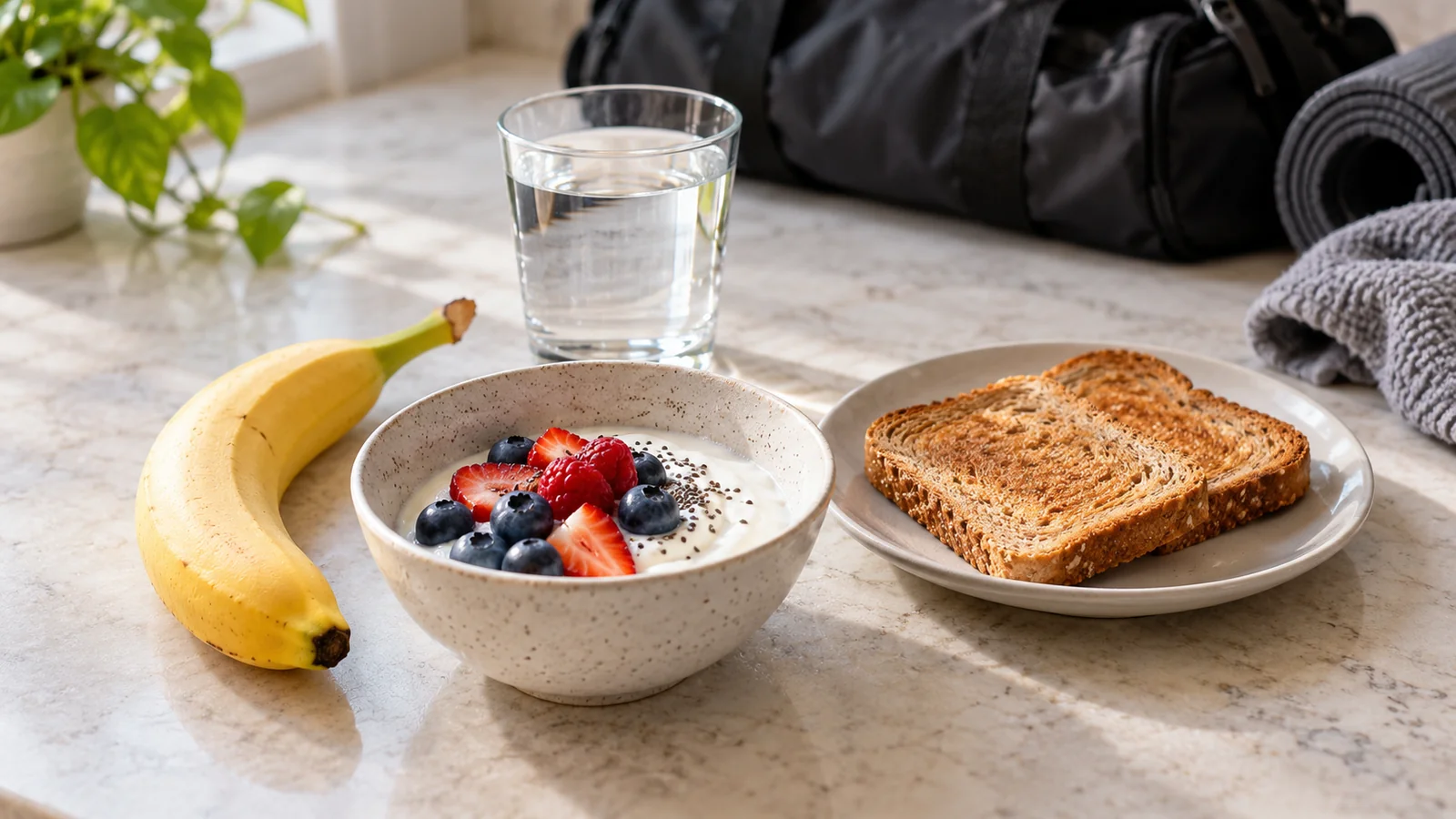
A good pre-workout snack is a familiar carbohydrate-rich food that you can digest comfortably before training. Try toast, a banana, applesauce, or crackers when you have little time. With an hour or two available, yogurt with cereal or a small sandwich may suit you better. The right choice depends on your last meal, the workout, your appetite, and your stomach.
You do not need to eat a special snack before every gym visit. A recent meal may already cover you. The useful question is whether a snack helps you arrive ready to train without feeling hungry, heavy, or uncomfortable.
This guide focuses on ordinary food for recreational adult workouts. It gives you timing options, twelve practical snacks, realistic portion examples, and a way to find your own reliable routine. If you have diabetes, a digestive condition, food allergies, or a prescribed eating plan, adapt these ideas with your healthcare team.
First decide whether you need a snack
Before choosing food, look backward at your last meal and forward at your session. A substantial lunch followed by a short workout two hours later is different from an evening class after a rushed sandwich at noon. Both people might search for the best pre-workout snack, but only one may feel a genuine need for extra food.
Ask yourself four questions:
- When did I last eat a meal, and did it leave me satisfied?
- Am I hungry now, or do I usually become hungry during this session?
- Am I doing a short, easy workout or a longer, more demanding one?
- How much time do I have before I start moving?
The Academy of Nutrition and Dietetics notes that a balanced diet generally covers the needs of casual exercisers training for an hour or less. Specialized recovery products and elaborate fueling schedules are often unnecessary. A snack can still be useful for comfort and scheduling, especially when a meal is several hours away.
For example, suppose you follow a two-day full-body workout plan. Your Tuesday session might follow lunch, while Saturday training happens before breakfast. Keep the workout plan consistent if it suits you, but let the food arrangement reflect each day. One fixed snack rule does not have to govern both.
Match your snack to the time available
The closer you eat to exercise, the more useful a smaller, simpler option may become. These windows are starting points for experimentation, not digestion deadlines. Your workout intensity and personal tolerance matter more than hitting an exact minute.
Two to four hours before training
This is often a convenient window for a normal meal. Think rice with tofu, a sandwich with a side of fruit, or oatmeal with milk. If that meal keeps you comfortable through your session, there may be no reason to add another snack.
The Academy’s pre-workout nutrition guidance suggests eating roughly one to four hours beforehand, adjusted to tolerance. Treat that as room to organize your day. A meeting that ends close to class time does not require you to squeeze a second lunch into your commute.
One to two hours before training
This window can work for a more substantial snack: cereal with milk, a small sandwich, or yogurt with fruit. Keep the portion smaller than a meal if larger servings make you feel full while exercising. If you usually eat a whole bowl comfortably, there is no need to halve it solely because a generic schedule says so.
Pack the snack with the start time in mind. An afternoon snack eaten at your desk may be more comfortable than the same food swallowed in the parking lot.
About thirty to sixty minutes before training
Try one familiar item first, such as toast, a few crackers, or a banana. A modest portion gives you a clearer tolerance test than a smoothie containing eight ingredients. You can add more food on a later day if you remain hungry.
Avoid treating these suggestions as compulsory amounts. Someone who ate lunch recently may want only a few bites; someone who has missed lunch may need an actual meal and a later workout.
Less than thirty minutes before training
If you want food this close to exercise, a small amount of an easy-to-eat option may be the most practical experiment. Applesauce or a little toast can be easier to manage than a large mixed meal. Eating immediately before exercise bothers some people, so begin gently and leave more time next session if needed.
If you feel unwell, do not rush into hard training to stay on schedule. A snack is not a reason to push through dizziness, nausea, or unusual weakness.
What your snack needs to do
Carbohydrate provides useful workout fuel
Bread, cereal, fruit, rice, and other carbohydrate-containing foods are practical foundations. The aim is to make food accessible when your schedule leaves a gap. You do not need an expensive product labeled for athletes to eat carbohydrate before the gym.
Research on timing is more complex than snack advertisements suggest. The International Society of Sports Nutrition’s nutrient-timing position stand emphasizes adequate overall energy and nutrient intake, while noting mixed performance findings for some carbohydrate strategies in resistance exercise. A snack cannot guarantee a personal record, and a perfect snack cannot compensate for routinely under-eating.
Protein can fit without becoming the whole snack
Yogurt, milk, tofu, or a sandwich filling can make a snack more substantial when there is time and you tolerate them well. You do not have to force a large protein serving into the last few minutes before training.
Keep the wider week in view. Our guide to protein on rest days covers the everyday pattern beyond the pre-workout window. Here, the immediate task is choosing food that fits the gap before exercise.
Fat and fiber depend on timing and tolerance
Nuts, beans, seeds, and whole grains can belong in a nourishing diet. A large portion just before intense movement may nevertheless feel uncomfortable for some people. Sports Dietitians Australia advises familiar, well-tolerated carbohydrate foods before sport and suggests adjusting fiber, fat, food form, and timing when gut comfort is a problem.
Use that advice locally. If a heavily seeded bar sits badly before your class, change that snack or eat it earlier. You do not need to remove fiber from the rest of your day.
Twelve practical pre-workout snacks
The timings below are suggestions to test. Portions can be scaled to your appetite, previous meals, and training. None of these foods has a special ability to build muscle or burn fat simply because you eat it before exercise.
1. A banana
A banana needs no refrigeration or utensils and is easy to buy individually. Try part or all of one when you want something uncomplicated before leaving home. The size of the fruit changes the amount of food, so there is no need to assume every banana provides an identical portion. Use a small container if you dislike bruised fruit in your gym bag. If bananas bother your stomach, another option is equally valid.
2. Toast with a little jam
Toast is useful when you have a few minutes at home and want a snack you can reproduce. Choose bread you already eat comfortably. Add jam if you enjoy it, keeping the topping amount consistent while testing the snack. Someone who finds a large breakfast uncomfortable might use this before training and eat the rest afterward. There is no requirement to choose the highest-fiber loaf for this particular occasion.
3. An applesauce cup or pouch
Applesauce is convenient when chewing through a meal feels unappealing early in the morning. Look at the package size and ingredient list rather than assuming all pouches are equivalent. Some are small fruit portions; others contain added ingredients or larger servings. Keep unopened shelf-stable portions where you pack your bag, follow storage directions after opening, and choose a flavor you already know agrees with you.
4. Plain crackers or pretzels
These work well as a desk-drawer backup. Portion some into a reusable container so you can eat what feels comfortable without managing a large open bag. Their main advantage is convenience. The salt on pretzels does not automatically mean you require additional electrolytes, and a salty snack is not a personalized hydration plan. Pair the food with ordinary access to water rather than trying to finish a bottle on command.
5. Rice cakes with jam
Rice cakes provide a simple base when you prefer something crisp. Keep the topping easy to transport or assemble them at home. If plain rice cakes leave you hungry and your workout is still an hour away, you might prefer a different snack with more substance. The best option is the one that solves your actual problem, whether that is hunger, portability, or having only a short break.
6. Yogurt with a small serving of cereal
This combination is useful when you have more time before exercise and access to refrigeration. Pack the cereal separately if you prefer it crunchy. Choose dairy yogurt, lactose-free yogurt, or a suitable alternative according to your needs, checking the label because their protein content can differ substantially. Start with ingredients you already enjoy rather than introducing a new yogurt, sweetener, and cereal on the same day.
7. A small bowl of oatmeal
Oatmeal can fit an earlier pre-workout meal or snack. Make the portion and toppings match the time available. A modest bowl is a different proposition from a large serving loaded with nuts, seeds, and dried fruit. If you train shortly after waking, you could prepare breakfast later and choose a smaller snack first. For more substantial morning meals, explore our high-protein breakfasts without protein powder.
8. Half a familiar sandwich
A small sandwich is a practical bridge between lunch and an evening workout. Use a filling you tolerate and store it safely. You can pack a full sandwich and divide it between an earlier snack and another eating occasion, provided it stays properly chilled when necessary. This option often suits someone who wants ordinary savory food rather than another sweet bar. It also makes use of ingredients already bought for lunch.
9. Cereal with milk or a suitable alternative
Keep a bowl and spoon at work if the office kitchen makes this convenient. The portion can be small, and the ingredients are easy to repeat. Milk alternatives vary, so choose based on your preferences, allergies, and overall diet rather than assuming they are nutritionally interchangeable. If a very bulky cereal feels uncomfortable before class, try an earlier time or a different cereal instead of abandoning the whole idea.
10. A small fruit-and-yogurt smoothie
A smoothie may appeal when solid food is difficult to face. Blend a familiar combination and keep the serving modest at first. A huge drink containing fruit, oats, seeds, nut butter, and several scoops of powder is effectively a meal, even though it comes through a straw. Note how much you actually drink. A cup-sized experiment is easier to evaluate than an unmeasured blender jug.
11. A simple packaged snack bar
A bar is useful when convenience matters. Read the actual label and ingredients. A compact cereal bar and a dense high-fiber protein bar may feel very different during exercise. Keep a bar you already tolerate in your bag as a backup, following storage instructions. Buying a multipack only after testing one can save money and prevent you from feeling obliged to finish a product that does not suit you.
12. A small portion of leftovers
Pre-workout food does not have to look like a conventional snack. A little of yesterday’s rice-based meal or another familiar dish can work when there is time before training. Reheat and store leftovers safely, and avoid letting convenience turn into an oversized second lunch. This option is especially useful for people who prefer savory food or want to reduce the number of separate foods they buy each week.
Check portions without turning food into homework
You can use the package label when you want a more consistent snack. The following numbers are illustrative label examples, not measured nutrition values for every brand:
- If one slice of your bread has 15 grams of carbohydrate and your jam portion has 10 grams, the combination provides 25 grams.
- If a yogurt serving has 15 grams of protein and you eat two-thirds of it, that portion provides 10 grams of protein.
- If a bar has 24 grams of carbohydrate, half the bar provides 12 grams.
- If two rice cakes contain 14 grams of carbohydrate together and the topping contributes 8 grams, the total is 22 grams.
Use your own product’s numbers. The FDA explains that nutrition information usually refers to one labeled serving, and a package can contain more than one. A labeled serving describes a reference amount; it does not tell you exactly how much you personally should eat.
You can also skip the arithmetic. A note such as “one slice of toast, forty-five minutes before class, comfortable throughout” may be all the information you need. Consistency helps you compare options, but precise macro tracking is optional.
Make the snack fit your real schedule
Early-morning training
Set out a shelf-stable option the night before. If you prefer a small snack, eat it when you wake and leave whatever comfortable interval your morning allows. Have a realistic breakfast plan for afterward. Avoid forcing yourself to eat a large meal simply because someone else’s routine starts two hours earlier.
Training straight after work
Move the decision earlier in the day. Pack a snack with lunch and choose a time you can actually stop to eat it. If meetings routinely erase that break, keep a backup option at your desk. On a day when lunch never happened, consider eating properly and changing the workout timing rather than trying to repair the entire gap with a few bites.
A short session between errands
Look at what you have already eaten. If a recent meal leaves you comfortable, bring water and get on with the session. If hunger is distracting, choose something available and familiar. The snack does not need to be photogenic or advertised for fitness. An ordinary food that fits the moment is enough.
Troubleshoot discomfort one change at a time
If a snack feels heavy, repeat the situation with a smaller portion or an earlier eating time. If you remain hungry, try a somewhat larger snack or improve the preceding meal. Change one variable so the result is interpretable.
Keep a brief record of food, approximate amount, time before exercise, workout type, and comfort. “Felt fine” is useful data. So is “too full during the jumping section.” Compare similar sessions when possible; a gentle lifting day and a fast-paced circuit are different tests.
Do not conclude that an entire food group is a problem from one difficult workout. Poor sleep, illness, stress, heat, and workout intensity can complicate the picture. Persistent digestive symptoms deserve professional attention rather than an expanding list of forbidden foods.
Keep drinks in the experiment too. A large volume swallowed immediately before moving can make it harder to interpret what bothered you. Our hydration guide for gym workouts explains how to approach water and electrolytes without forcing excessive fluid.
Food safety and medical considerations
Carry yogurt, milk, perishable sandwich fillings, and similar foods in an insulated bag with adequate cooling when refrigeration is unavailable. The FDA’s food-storage guidance says foods requiring refrigeration should not sit at room temperature for more than two hours, or one hour when temperatures exceed 90°F. An unrefrigerated gym bag is not a safe all-day storage plan.
If you use insulin or another medicine that can cause low blood glucose, follow an individualized exercise plan. NIDDK explains that physical activity can lower blood glucose during and after exercise. A generic snack list does not replace guidance on monitoring, carbohydrate intake, or medication. Do not change medication based on this article.
Stop exercising if you develop concerning symptoms. Recurrent dizziness, fainting, unexplained weakness, or persistent stomach pain should be assessed. Seek urgent help for severe symptoms, chest pain, or confusion.
Common questions about pre-workout snacks
Do I have to eat before every workout?
No. Your previous meals, appetite, session, and medical needs matter. If your current routine leaves you comfortable and able to train, there may be nothing to fix. Do not add a snack only to satisfy an arbitrary rule.
Can I have a snack if I am trying to lose weight?
Yes. Consider the snack within your overall eating pattern. It can replace part of another eating occasion or help bridge a genuine gap. Avoid treating food as something you must earn through exercise. If weight-management decisions are becoming stressful or restrictive, seek qualified support.
Is peanut butter a good pre-workout snack?
It can be part of one if you enjoy and tolerate it. Consider having a small amount with toast rather than assuming a large spoonful meets every fueling need. Leave more time if that combination feels heavy, and choose an allergy-safe alternative when needed.
What should I buy first?
Choose one everyday option and one backup: perhaps toast at home and an applesauce pouch in your bag. Test them before purchasing several specialty products. A routine that survives busy days is more useful than a long shopping list.
Build one repeatable routine
Choose a familiar snack, match its size to the time available, and notice how you feel during a few comparable workouts. Keep what works and make small adjustments where it does not. The goal is a comfortable, well-fed training routine you can repeat.
Ready to put that routine into practice? Explore Workit on the App Store and make your next gym visit easier to show up for.