
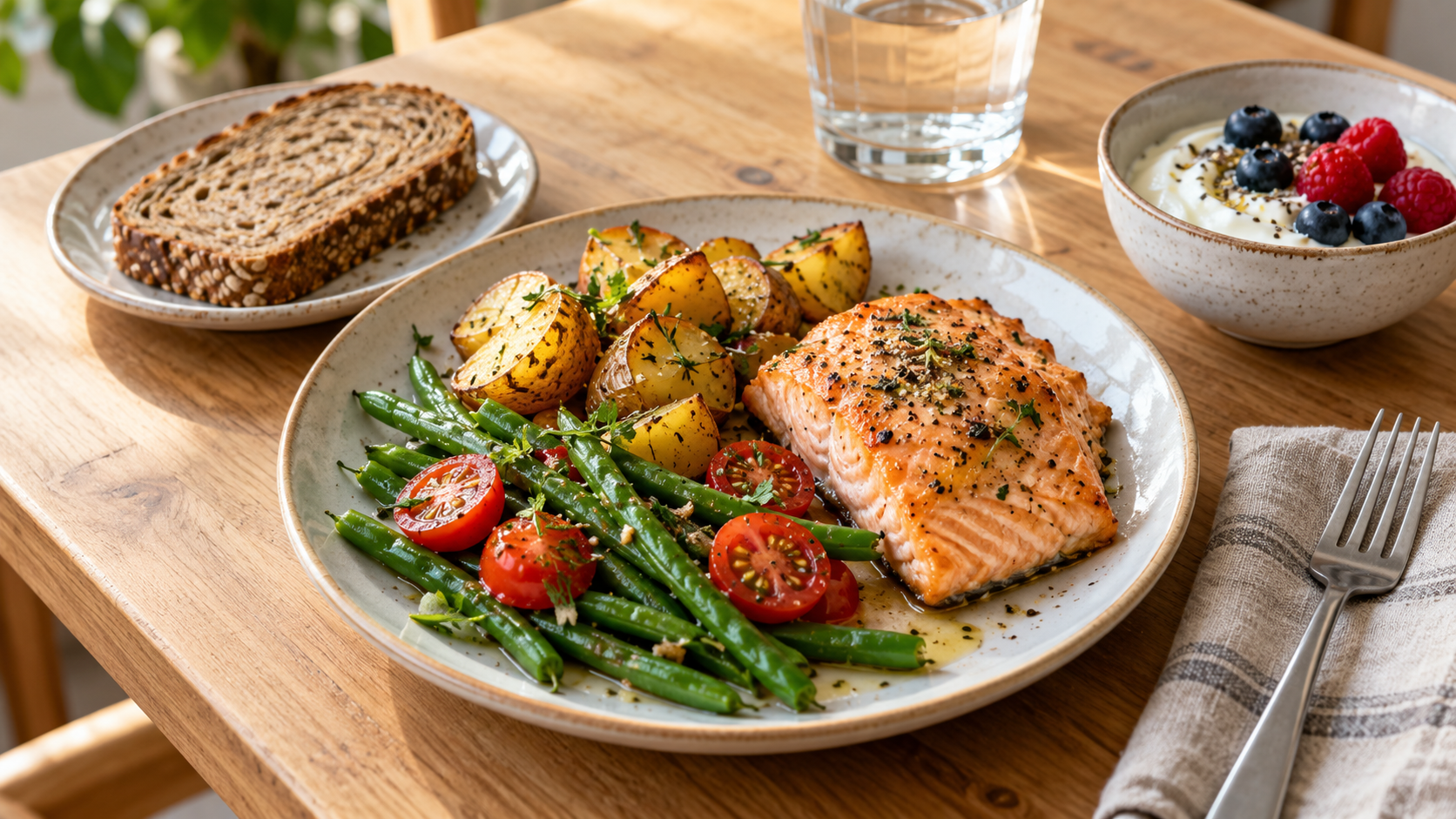
A calorie surplus means consuming more energy from food and drinks than your body uses over time. For example, if someone uses an average of 2,400 calories a day and consumes an average of 2,600, the difference is a 200-calorie surplus. Those numbers illustrate the idea; they are not a recommended intake for everyone.
You will often hear about a calorie surplus in conversations about building muscle. Eating enough can support training and recovery, but extra food does not automatically become muscle. Training, nutrition, health, and time all influence the outcome.
This guide explains what a calorie surplus means, how it differs from maintenance and a deficit, and how adults pursuing a muscle-building goal can approach it without extreme eating or constant tracking.
What does calorie surplus mean?
Calories measure energy. Your body gets energy from what you eat and drink, then uses it to stay alive, digest food, move through daily life, and exercise. A surplus describes the relationship between energy coming in and energy being used.
Total daily energy expenditure, often shortened to TDEE, includes several components:
- Resting energy expenditure: energy needed for basic functions such as breathing, circulation, and maintaining body temperature
- The thermic effect of food: energy used to digest, absorb, and process food
- Physical activity: planned workouts plus everyday movement, including walking, housework, and moving around at work
These components are described in the National Academies' Dietary Reference Intakes for Energy.
A calorie surplus is therefore measured against your total needs, not just the calories shown on a treadmill. You still need substantial energy on a day without a workout.
The phrase also describes a pattern over time. A large dinner does not reveal your overall energy balance, and a smaller lunch does not establish a deficit. Your usual intake and activity matter more than one isolated meal.
Calorie surplus vs maintenance vs deficit
The three terms describe different energy relationships:
- Maintenance: energy intake roughly matches energy expenditure over time
- Calorie surplus: energy intake is greater than energy expenditure over time
- Calorie deficit: energy intake is lower than energy expenditure over time
Over a sustained period, a surplus generally supports weight gain, a deficit generally supports weight loss, and maintenance generally supports stable weight. This scientific overview explains the basic energy-balance relationship.
Consider a hypothetical adult whose average expenditure is 2,400 calories. An average intake of 2,400 would represent maintenance; 2,600 would represent a 200-calorie surplus; 2,200 would represent a 200-calorie deficit. The arithmetic is straightforward, but the expenditure figure is usually an estimate.
Maintenance is also a moving target. A new physical job, a change in training, or a change in body size can alter energy needs. Eating the same meals does not guarantee the same energy balance forever. The NIDDK Body Weight Planner illustrates how intake, activity, and weight interact, although a calculator cannot replace individual assessment.
Does a calorie surplus mean muscle gain?
A calorie surplus can help support muscle gain when it accompanies suitable resistance training and adequate nutrition. However, it does not decide where every extra calorie goes. Some weight gained may be muscle, some may be fat, and some short-term change may reflect water and stored carbohydrate.
Resistance training gives muscles a reason to adapt. Protein provides amino acids involved in repair and building tissue. Adequate overall energy helps make that work possible. The International Society of Sports Nutrition's protein position stand describes how resistance exercise and protein intake work together to stimulate muscle protein synthesis.
Eating more without a meaningful training stimulus will not reliably produce the muscle gain someone expects from a structured strength program. Likewise, repeatedly adding food is unlikely to solve a program that is inconsistent or too difficult to recover from.
A surplus is not an absolute requirement for every person to improve body composition. A controlled trial showed that some young men gained lean body mass while losing fat during a supervised exercise and nutrition intervention. That finding establishes possibility, not a reason to copy its demanding protocol. See the original trial by Longland and colleagues.
For someone whose main goal is gaining muscle, the practical question is whether their current eating supports productive training and recovery. A qualified coach or sports dietitian can help interpret that alongside experience, preferences, and health.
How large should a calorie surplus be?
There is no single surplus that guarantees the best result for every adult. A larger person with a physically demanding routine may have very different needs from someone smaller who spends most of the day seated. Training experience also changes how much room there is for rapid improvement.
Research gives a reason to be cautious about aggressive bulking. In an eight-week study with 17 completing participants, trained lifters followed maintenance, roughly 5% surplus, or roughly 15% surplus plans. Faster weight gain was more consistently associated with increased skinfold thickness than with better muscle or strength outcomes. Some outcomes differed, and the small, short study cannot establish an ideal surplus for everyone. Read the 2023 energy-surplus study.
The useful takeaway is to consider a modest, adjustable increase rather than assume that much more food means much more muscle. For an otherwise healthy adult who has decided to pursue this goal, that could mean adding a manageable snack or increasing part of a regular meal, then reviewing the broader pattern.
For arithmetic only, 5% of an estimated 2,400-calorie maintenance intake is 120 calories, giving an estimated intake of 2,520. This is not a prescribed starting target. The maintenance estimate may be inaccurate, and an appropriate plan may differ.
You do not need to force food past persistent discomfort or pursue rapid scale changes. If a plan depends on ignoring how you feel, it deserves a rethink.
How to estimate your needs without chasing precision
An online calculator can provide an initial estimate using information such as age, height, weight, and activity. Its output is a starting hypothesis. It cannot fully capture your movement, digestion, training demands, or changing routine.
A practical starting point is your existing pattern. If your weight has been broadly stable, you feel well, and your activity has been consistent, your usual intake may be reasonably close to maintenance. Stable weight alone does not prove that your nutrition is adequate, so include how you feel and perform.
You can gather useful information without counting every bite:
- Notice whether you regularly miss meals or arrive at training hungry
- Look at how your energy and concentration hold up through the day
- Check whether meals include protein and a meaningful source of carbohydrate
- Consider whether a new training schedule has outgrown your old eating routine
If you enjoy food logging, a short, representative record can help a dietitian spot patterns. Include ordinary weekdays and weekends rather than trying to create a perfect-looking record. If logging makes eating stressful, use a meal-based approach instead.
The aim is to identify a sustainable change you can understand. Changing breakfast, adding two supplements, and doubling training at once makes it much harder to tell what helped.
What to eat in a calorie surplus
A surplus still benefits from a varied eating pattern. More energy does not remove the need for protein, carbohydrate, fats, vitamins, minerals, and fiber. The NHS Eatwell Guide provides a useful overview of food groups and emphasizes balance across the day or week rather than perfection at every meal.
Include protein in regular meals
Protein-containing options include eggs, fish, poultry, dairy, tofu, tempeh, beans, and lentils. Choose foods that fit your culture, preferences, access, and budget.
For most exercising adults, the ISSN position stand describes approximately 1.4–2.0 grams of protein per kilogram of body weight per day as sufficient. This is a sports-nutrition range, not an individualized prescription. People with conditions that affect protein requirements should get professional advice rather than adopt an online target.
A practical first step is simpler: check whether breakfast, lunch, and dinner each contain a protein source. That may be more useful than adding a shake to a day of inconsistent meals.
Keep carbohydrate and fat in the picture
Carbohydrate helps supply energy for exercise and replenish glycogen, the stored carbohydrate in muscle and liver. Rice, oats, potatoes, bread, pasta, fruit, and beans can all contribute. The NIH Office of Dietary Supplements emphasizes adequate energy and multiple nutrients for athletic performance.
Foods such as olive oil, avocado, nuts, and seeds can add energy in relatively small portions. They can be helpful when larger meals feel difficult. You can use them alongside other foods rather than making them the entire strategy.
Keep fruit, vegetables, and fluids in your routine. A muscle-building goal does not require a narrow menu, and nutritious meals can include familiar convenience foods such as canned beans, frozen vegetables, and microwaveable grains.
Practical meal and snack examples
The following combinations show how to adapt ordinary food. They are options, not a complete meal plan or a promise that a particular meal creates a surplus. The overall amount you need depends on the rest of your day.
Breakfast that is easy to repeat
Start with oats prepared with milk or a fortified soy alternative. Add fruit and a spoonful of nut or seed butter. If you prefer savory food, try eggs or tofu with toast and fruit.
To increase your usual breakfast, you might add a piece of toast, increase the oats, or include yogurt. Choose one change that feels comfortable and is easy to repeat. A complicated breakfast that you skip on busy mornings is less useful than a simple one you actually eat.
A flexible lunch bowl
Combine rice, quinoa, or another grain with chicken, tofu, lentils, or beans. Add vegetables and a dressing you enjoy. An extra portion of the grain, some avocado, or an olive-oil-based dressing can increase energy without requiring an entirely different lunch.
For a packed version, keep the dressing separate and use ingredients that travel well. Leftover dinner can do the same job. There is no requirement for a special meal-prep recipe or a separate set of foods labeled for bulking.
A familiar dinner with room to adjust
Try pasta with lentil or meat sauce and vegetables, or potatoes with fish or tempeh and a side you like. Adapt the meal already eaten in your household instead of building a second dinner around fitness rules.
If the main challenge is finding time, prepare an extra portion for tomorrow. Keeping a dependable meal available can matter more than finding a theoretically perfect combination you rarely cook.
A snack that fits a real gap
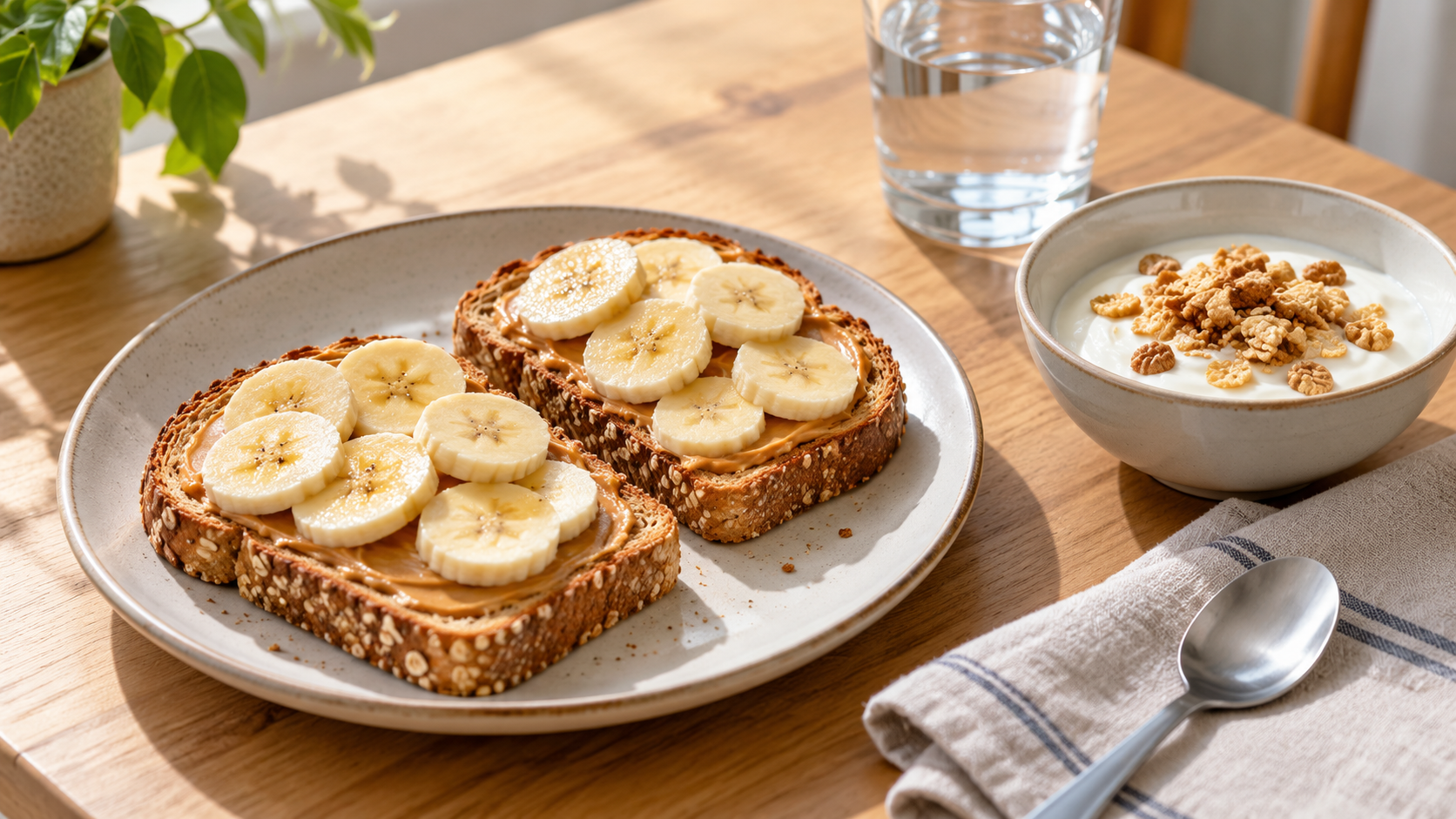
Options include yogurt with cereal, toast with peanut butter, hummus with bread, or fruit with a handful of nuts. A simple sandwich can work when the gap between lunch and dinner is long.
Pick a snack because it makes your day easier. You can bring it to work, eat it before an evening session, or have it afterward when dinner is delayed. A shake is an option for convenience, but ordinary food can also meet your needs.
Training and recovery still matter
A food plan works best alongside training you can perform consistently. For a muscle-building goal, that generally means resistance exercises matched to your ability, a manageable schedule, and gradual progression as you become more capable.
Progress can involve better technique, additional repetitions, or a suitable increase in resistance. It does not require setting a personal record every session. If you are new, getting help with exercise selection and technique can make the first weeks more productive.
For general health, the CDC recommends muscle-strengthening activity on at least two days a week. That is a public-health baseline rather than a complete muscle-building program. Your specific routine should also fit your recovery and other activities.
Sleep deserves space in the plan. The CDC recommends at least seven hours for adults aged 18–60, with age-specific guidance for older adults. Persistent sleep problems warrant a conversation with a healthcare professional.
Rest days still involve normal energy needs and recovery from previous sessions. You can keep a steady meal routine rather than repeatedly making large changes because a workout did or did not happen.
How to review progress without daily weight pressure
Give a manageable change enough time to become a routine, then review several signs together. One unusually good workout or one disappointing session does not tell the whole story.
Useful questions include:
- Am I completing my planned sessions more consistently?
- Are repetitions, technique, or training loads improving over time?
- Do I have enough energy for work, relationships, and activities outside exercise?
- Are meals comfortable, enjoyable, and affordable?
- Is the approach becoming easier to maintain?
If body weight is a useful and emotionally neutral measure for you, occasional measurements under similar conditions can add context. Daily weighing is not required. A healthcare professional can help decide whether weighing is useful at all.
Short-term scale changes can reflect fluid, food in the digestive tract, and glycogen changes. They cannot identify how much muscle you have gained. Research on glycogen and body hydration helps explain why changing carbohydrate intake can change body mass without an equivalent change in muscle tissue.
If progress stalls, first look for an obvious explanation: missed meals, a disrupted schedule, poor sleep, illness, or an unsuitable training plan. Increasing food automatically may miss the real issue. Adjust one practical factor at a time when possible, and seek help if the picture remains unclear.
Common calorie surplus mistakes
One mistake is treating an estimate as an exact requirement. Food records and expenditure calculations both involve uncertainty. A target ending in a precise number does not make it a precise measurement of your body.
Another is giving the surplus more attention than the habits it is meant to support. Someone can spend hours comparing calorie calculators while repeatedly missing training or lunch. Start with the part of the routine that is actually getting in the way.
A third mistake is turning food into a test of discipline. You do not need to eat beyond persistent discomfort, eliminate enjoyable foods, or compensate for an unusual day with restriction or extra exercise. Returning to a normal routine is a reasonable response to an unpredictable week.
Finally, avoid copying another person's intake simply because their goal sounds similar. Their schedule, body, appetite, and training history may be different. A useful plan should fit your life well enough to keep practicing it.
When to get individual support
This guide is general education for adults, not treatment advice. Children and teenagers, people who are pregnant or breastfeeding, and anyone recovering from illness or an eating disorder need guidance suited to their circumstances. Generic bulking targets are not an appropriate substitute.
Speak with a clinician about unexplained weight loss or persistent difficulty eating. The NHS specifically advises medical review for sudden or unintentional weight loss.
Ongoing fatigue, repeated injuries, menstrual changes, or declining performance also deserve attention. They can have several causes. The IOC consensus on Relative Energy Deficiency in Sport explains that inadequate energy availability can affect both health and performance in athletes of different sexes. A calorie app cannot diagnose that condition.
If food or body tracking is causing distress, step back from the numbers and seek a qualified healthcare professional. Supporting health and a workable relationship with food takes priority over achieving a particular surplus.
Frequently asked questions
Is a calorie surplus the same as bulking?
A surplus is an energy-balance state. Bulking is a fitness term for a period focused on gaining body mass, usually with the intention of building muscle. A person can be in a surplus without following a bulking plan, and a muscle-building plan should include more than increased food intake.
Can I be in a surplus without counting calories?
Yes. Your energy balance exists whether or not you measure it. A consistent meal pattern, an appropriate food addition, and periodic review can support a meal-based approach. You will not know the exact surplus, but calorie counting cannot establish it perfectly either.
Does a calorie surplus have to happen every day?
No. Daily needs and intake naturally vary. The broader pattern matters more than matching an identical number each day. Regular meals around your usual activity are often easier to maintain than trying to correct every variation.
Will all extra calories turn into muscle?
No. Muscle gain depends on training and other factors, and a surplus can also increase fat stores. The scale cannot separate those changes for you. Avoid promises of a completely fat-free bulk or a guaranteed amount of muscle per month.
Do I need protein powder or a mass gainer?
No. Supplements are not required to create a surplus. Protein powder may be convenient, but meals and snacks can provide protein and energy too. Consider actual needs, tolerance, cost, and any medical advice before adding products.
Put your nutrition and training plan together
The central meaning of calorie surplus is simple: energy intake exceeds energy use over time. Applying it well means respecting uncertainty, eating a varied diet, training consistently, and making changes that support your health and daily life.
If you want help organizing your routine, Workit offers personalized workout programs and nutrition plans. You can explore those features and current availability in the Workit App Store listing. Use planning tools to support consistency, with professional guidance when your needs call for it.